"Pumpkin seed oil for hair" is one of the fastest-growing natural hair-loss searches on Google — usually from people who've already tried the basics and are looking for something backed by more than a testimonial. Here's what the research and dermatology community actually say.
How Pumpkin Seed Oil Is Thought to Help Hair
Hair thinning at the crown and hairline is frequently linked to DHT (dihydrotestosterone), a hormone derived from testosterone that can shrink hair follicles over time in people who are genetically sensitive to it. Pumpkin seed oil contains phytosterols and other plant compounds that are thought to help block the enzyme (5-alpha reductase) that converts testosterone into DHT — a similar mechanism to some prescription hair-loss treatments, just milder and plant-derived.
What Does the Evidence Actually Show?
According to a summary published by Cleveland Clinic, pumpkin seed oil has received what's described as a "level two" evidence rating for hair growth — a category reserved for ingredients that have been tested in larger studies without significant safety concerns, alongside options like zinc. That's a genuinely encouraging signal, but it comes with honest caveats:
- Most of the strongest topical research has been done in non-human models, with human oral-supplement studies still limited
- Hair loss has multiple underlying causes (genetics, hormones, nutrient deficiency, stress, thyroid issues), and pumpkin seed oil primarily addresses the DHT-related pathway
- Supplements aren't regulated with the same rigor as medications, so product quality varies
In short: promising and worth trying, not a guaranteed fix, and not a substitute for figuring out your actual cause of hair thinning if it's significant.
How Long Until You See Results?
Patience matters here. Hair grows roughly a quarter of an inch per month, so dermatologists note that meaningful visible improvement typically takes 6–12 months of consistent use, though some people notice reduced shedding somewhat earlier. This is true of essentially every non-prescription hair-growth approach, not just pumpkin seed oil — anyone promising results in a few weeks isn't being straight with you.
Pumpkin Seed Oil for Skin and Prostate Health
Beyond hair, pumpkin seed oil is also researched for:
- Skin: Rich in vitamin E, zinc, and essential fatty acids that support skin barrier function and hydration.
- Prostate health: The same DHT-moderating phytosterols have been studied for supporting normal urinary function in men, particularly around natural age-related prostate changes — though this is an area to discuss with a doctor rather than self-treat, especially with existing prostate conditions.
How to Use Pumpkin Seed Oil
| Method | How | Best For |
|---|---|---|
| Oral (capsule/oil) | Taken daily with food, per label directions | Hair, prostate, general omega support |
| Topical (scalp) | Massaged into scalp, left on or rinsed after 30+ minutes | Localized scalp/hair support |
| Topical (skin/face) | A few drops applied directly or mixed into a moisturizer | Hydration, barrier support |
Frequently Asked Questions
Can pumpkin seed oil regrow hair that's already gone?
It's best understood as slowing further DHT-related thinning and supporting the follicles you have, not reversing long-term follicle loss. If you're dealing with significant or sudden hair loss, seeing a dermatologist to identify the cause first will save time.
Is pumpkin seed oil safe to use every day?
Yes, for most people, both orally and topically — it's a food-derived oil with a strong general safety profile. As with any new supplement, introduce it gradually and watch for any skin irritation if using it topically.
Does pumpkin seed oil work for women's hair thinning too?
The DHT mechanism applies to anyone experiencing androgenic (hormone-related) thinning, which does affect women as well as men, though female pattern hair loss often has additional contributing factors worth discussing with a doctor.
This article is for general educational purposes and is not medical advice. Pumpkin seed oil is not intended to diagnose, treat, cure, or prevent any disease, including hair loss or prostate conditions. If you're experiencing significant hair loss or prostate symptoms, talk to a doctor or dermatologist.
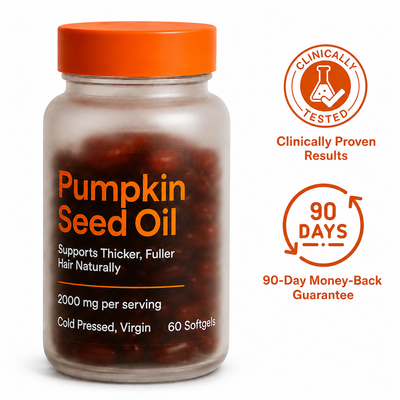
Nutritions Lab's Pumpkin Seed Oil is cold-pressed to help preserve the phytosterol content this research is based on.
More in Hair, Scalp & Hormone-Related Beauty
- Maca Root vs. Ashwagandha: Which Adaptogen Do You Actually Need? (Adaptogens, Stress & Sleep)