Maca root and ashwagandha show up together constantly in searches — both labeled "adaptogens," both sold as energy and hormone support, and both frequently confused for doing the same job. They don't. Here's what the research actually says about each, and how to think about combining them.
Ashwagandha: What It's Actually Good At
Ashwagandha's strongest evidence is for stress and cortisol. Per a fact sheet from the NIH Office of Dietary Supplements, a 2021 review of seven clinical trials found ashwagandha significantly reduced perceived stress and anxiety and lowered serum cortisol levels, with benefits more consistent at doses of 500–600 mg per day. It's also shown modest but measurable improvements to sleep quality and total sleep time, particularly after at least 8 weeks of consistent use.
Ashwagandha safety notes worth knowing:
- Common mild side effects: stomach upset, loose stools, drowsiness
- Rare but documented case reports of liver injury — discontinue and see a doctor if you notice unusual fatigue, yellowing skin/eyes, or dark urine
- Can affect thyroid hormone levels — talk to a doctor first if you have a thyroid condition
- Not recommended during pregnancy
Maca Root: What It's Actually Good At
Maca's research base leans toward libido, sexual function, and mood/energy rather than stress reduction. Human studies (summarized by Healthline) have used doses around 1.5–3 grams per day for roughly 12 weeks, with findings including improved sexual function in men (including some on antidepressants), improved mood and energy scores versus placebo, and some benefit for menopause-related symptoms like hot flashes and sleep disruption in women. Notably, maca does not appear to raise testosterone — its effects seem to work through a different pathway.
Maca safety notes worth knowing:
- Generally considered safe at up to 3g/day for periods up to about 4 months
- Not recommended during pregnancy or while nursing (safety not established)
- Choose a reputable source — there's at least one case report of contamination affecting a poorly sourced product
Maca vs. Ashwagandha, Side by Side
| Ashwagandha | Maca Root | |
|---|---|---|
| Primary use case | Stress, cortisol, sleep | Energy, mood, libido |
| Best taken | Evening (for sleep) or consistently daily | Morning, with food |
| Typical studied dose | 500–600 mg/day | 1.5–3 g/day |
| Time to notice effects | 2–8+ weeks | ~12 weeks |
| Key caution | Thyroid, liver, pregnancy | Pregnancy, sourcing quality |
Can You Take Both Together?
Yes — they target different systems (cortisol/stress response vs. energy/hormone-adjacent pathways) and are commonly combined precisely because they're complementary rather than redundant. That said, "can" isn't the same as "should for everyone": if you're on medication, pregnant, or managing a thyroid, liver, or hormone-sensitive condition, run any combination past your doctor first given the specific cautions above.
Frequently Asked Questions
Which one should I try first if I only pick one?
If your main issue is feeling wired, anxious, or sleeping poorly, ashwagandha's evidence base fits better. If your main issue is low energy, low libido, or general flatness in mood, maca's evidence base is the closer match.
How long before I notice a difference?
Both are slow-acting. Ashwagandha's clinical benefits were measured from 2 to 8+ weeks; maca's studies typically ran a full 12 weeks. Consistency matters more than the specific brand.
Is it safe to take these every day long-term?
Most studies run 8–12 weeks, so long-term (many months to years) safety data is genuinely limited for both. Taking periodic breaks and checking in with a healthcare provider, especially if you have any of the conditions noted above, is the sensible approach.
This article is for general educational purposes and is not medical advice. Maca root and ashwagandha are not intended to diagnose, treat, cure, or prevent any disease. Talk to your healthcare provider before starting either, especially if pregnant, nursing, or managing a thyroid, liver, or hormone-related condition.
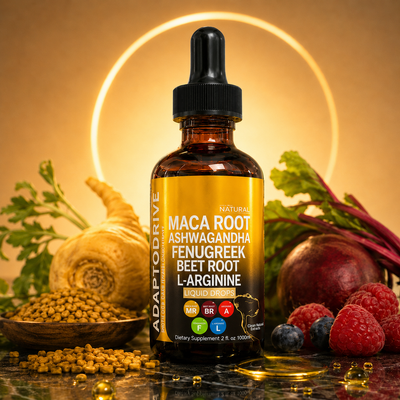
Nutritions Lab's Maca Root Ashwagandha Drops combines both in one liquid formula dosed for daily use.
More in Adaptogens, Stress & Sleep
- Do Melatonin Sleep Gummies Actually Work? Dosage, Timing, and What to Check
- Pumpkin Seed Oil Benefits: Hair Growth, DHT, and Skin — What the Evidence Says (Hair, Scalp & Hormone-Related Beauty)