"Omega-3" and "fish oil" are two of the most-searched supplement terms on Google — and also two of the most misunderstood. Most people land on this topic asking one of three questions: does it actually do anything, how much should I take, and is it safe? This guide answers all three honestly, using guidance from major health institutions rather than marketing claims.
What Is Omega-3 Fish Oil, Exactly?
Fish oil supplements provide two long-chain omega-3 fatty acids your body can't make efficiently on its own: EPA (eicosapentaenoic acid) and DHA (docosahexaenoic acid). These fats are structural components of cell membranes throughout the body, and they're precursors to molecules that help regulate inflammation.
Most people don't get enough EPA/DHA from diet alone, particularly if oily fish (salmon, mackerel, sardines, herring) isn't eaten at least twice a week — which is the case for the majority of adults.
What Does Omega-3 Fish Oil Actually Do?
According to a clinical review published by Cleveland Clinic, omega-3 fatty acids from fish have well-documented benefits for heart health, and at intakes in the 1–3 gram per day range may help:
- Lower triglyceride levels
- Support healthy blood pressure already within a normal range
- Reduce excess clot and plaque formation risk factors
- Modulate the body's inflammatory response
It's worth being upfront about the nuance here: the strongest evidence for these benefits comes from eating fish itself or from prescription-strength, pharmaceutical-grade omega-3 (used under medical supervision for specific conditions like very high triglycerides). Over-the-counter supplements provide a lower, food-like dose and are best thought of as filling a dietary gap — supporting general cardiovascular and cognitive wellness — rather than as a treatment for any diagnosed condition.
How Much Fish Oil Should You Take a Day?
Typical over-the-counter omega-3 supplements provide around 1 gram of combined EPA/DHA per serving, in line with general dietary intake recommendations. This is different from prescription omega-3, which is dosed much higher (up to 4 grams/day) and used only under a doctor's care for specific medical needs.
Always check the EPA + DHA amount on the supplement facts panel rather than the total fish oil weight — a "1000mg fish oil" softgel might only contain 300mg of actual EPA/DHA, with the rest being other fats.
Fish Oil Side Effects
Fish oil is generally well tolerated, but the most commonly reported issues (per Cleveland Clinic and Mayo Clinic reviews) include:
- A fishy aftertaste or "fish burps"
- Mild nausea or upset stomach, especially on an empty stomach
- Bad breath or body odor at higher doses
At higher (prescription-level) doses, research has also flagged an increased risk of atrial fibrillation (an irregular heart rhythm) in some patients, and omega-3s can mildly increase bleeding risk — which matters if you're on blood thinners or scheduled for surgery. This is a good example of why checking with a doctor or pharmacist before starting any new supplement, especially if you take medication, is worth the five-minute conversation.
Fish Oil vs. Algae Oil: Which Is Better?
Algae-based omega-3 has grown in popularity as a plant-based alternative, and the honest answer is: it depends on what you're optimizing for.
| Factor | Fish Oil | Algae Oil |
|---|---|---|
| Source | Oily fish (anchovy, sardine, etc.) | Marine algae (the original source fish get their omega-3 from) |
| EPA/DHA form | Both, typically higher EPA | Both, typically higher DHA |
| Diet compatibility | Not vegan/vegetarian | Vegan and vegetarian friendly |
| Aftertaste | More common | Generally milder |
| Sustainability | Depends on fishery sourcing | Often considered more sustainable |
| Cost | Generally lower | Generally higher |
Both are legitimate, bioavailable sources of EPA/DHA. If diet, sustainability preferences, or fish allergies are a concern, algae oil is a well-supported alternative — not a downgrade.
Who Should Be Extra Careful With Fish Oil?
- People on blood thinners or with a bleeding disorder
- People with a diagnosed heart rhythm condition (talk to a cardiologist first)
- People with a fish or shellfish allergy
- Anyone scheduled for surgery in the near future
Frequently Asked Questions
Is it better to take fish oil in the morning or at night?
Timing doesn't meaningfully affect absorption — what matters more is taking it with a meal that contains some fat, which improves absorption and reduces the chance of a fishy aftertaste.
Can I get enough omega-3 from food instead of supplements?
Yes — two servings of oily fish per week can meet general intake guidelines for most healthy adults. A supplement is a convenient way to fill the gap if that's not realistic for you.
Is fish oil safe to take every day long-term?
For most healthy adults at standard OTC doses (around 1g EPA/DHA per day), yes — but "safe long-term" isn't the same as "right for everyone," which is why the cautions above matter. If in doubt, a quick check with your doctor or pharmacist costs nothing and rules out any personal risk factors.
This article is for general educational purposes and is not medical advice. Fish oil and omega-3 supplements are not intended to diagnose, treat, cure, or prevent any disease. Talk to your healthcare provider before starting any new supplement, particularly if you take medication or have a heart condition.
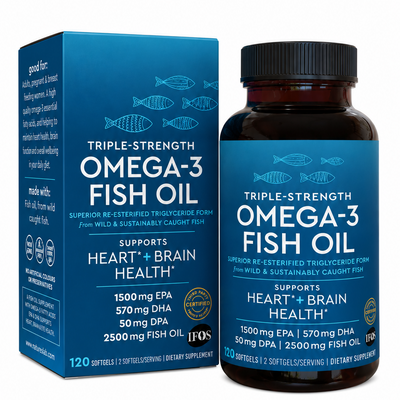
Nutritions Lab's Omega-3 Fish Oil is formulated to standard EPA/DHA dosing to help you fill dietary gaps without the guesswork.