If you've spent any time reading about longevity or cellular energy, you've probably run into both NMN and NAD+ — often in the same sentence, sometimes used almost interchangeably. They're closely related, but they're not the same thing, and understanding the difference makes it a lot easier to know what you're actually buying when you pick up a supplement.
What is NAD+?
NAD+ (nicotinamide adenine dinucleotide) is a coenzyme found in every cell in your body. It plays a central role in turning the food you eat into usable cellular energy, and it's involved in hundreds of metabolic processes. Research has shown that NAD+ levels tend to decline with age, which is a big part of why it's become such a popular topic in the longevity and wellness space. This age-related decline has been documented in metabolic and aging research, including work referenced by bodies such as the National Institute on Aging, and is a key reason NAD+ precursors have drawn scientific interest in the longevity field.
Here's the catch: you can't just take an NAD+ supplement and have your body absorb it efficiently. The NAD+ molecule is too large and unstable to survive digestion intact, so supplement companies instead focus on its precursors — smaller molecules the body can absorb and convert into NAD+ itself.
What is NMN?
NMN (nicotinamide mononucleotide) is one of those precursors. It's a smaller, more bioavailable molecule that the body can take up and convert into NAD+ through a well-studied metabolic pathway. Biochemistry research has characterized this conversion pathway in detail, which is part of why NMN is considered one of the more direct NAD+ precursors available in supplement form. That's why you'll see NMN marketed as a way to "support NAD+ levels" rather than as NAD+ itself — it's the raw material, not the finished product.
NMN vs NAD+: the key difference
In short: NAD+ is the coenzyme your cells actually use, while NMN is a precursor your body converts into NAD+. Taking NMN is currently the more practical route for most people, since direct NAD+ supplementation faces bigger absorption hurdles. Some brands also sell NR (nicotinamide riboside), another NAD+ precursor that takes a slightly different metabolic path to the same destination.
Why people choose NMN supplements
Because of the bioavailability issue above, NMN has become the more common starting point for people building an NAD+-focused routine. It's typically taken as a capsule or powder, once daily, and is often chosen by people who want a straightforward addition to an existing supplement stack rather than a specialized IV or injection.
What to look for in an NMN supplement
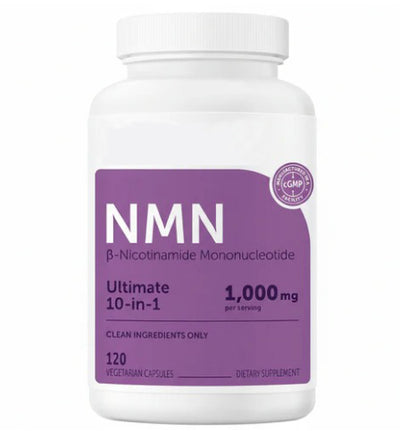
- Dose per serving — NMN products vary widely, from a few hundred milligrams to 1000mg+ per serving.
- Capsule form — vegetarian capsules are worth checking for if that matters to your diet.
- Third-party or ingredient transparency — clear labeling of exactly what's in the formula, without proprietary blends hiding the actual NMN amount.
- Non-GMO and filler-free formulations — fewer unnecessary additives.
Our NMN Complex is formulated with 1000mg of NMN per serving in vegetarian capsules, with no artificial fillers, if you're looking for a straightforward place to start.
This article is for general information only and is not medical advice. NMN and NAD+ supplements are not intended to diagnose, treat, cure, or prevent any disease. Talk to your healthcare provider before starting any new supplement, especially if you're pregnant, nursing, or taking medication.
More in Longevity & Cellular Energy
- Beet Root Powder Benefits: The Complete Guide (Natural Energy & Circulation)