Bee venom cream gets searched constantly alongside terms like "natural Botox" — a nickname that oversells what it does, but undersells that there's real research behind it. Here's an honest look at the mechanism, the evidence, and the safety considerations before you try it.
What's Actually in Bee Venom That Affects Skin?
The key active component is melittin, a protein that makes up roughly half of bee venom's dry weight. When applied topically at safe, diluted cosmetic concentrations, melittin triggers a mild, temporary inflammatory response — increased blood flow to the area, a boost in collagen production, and a temporary plumping effect. It's essentially tricking the skin into a gentle repair response, without the actual damage of a sting.
Does Bee Venom Reduce Wrinkles?
This is where the evidence is strongest. A clinical trial published in Clinical Interventions in Aging found measurable wrinkle depth reduction — around an 11% improvement — over 12 weeks of consistent topical use. That's a real, published, peer-reviewed result, not just a marketing claim, though it's also a modest effect that builds gradually rather than a dramatic overnight change (hence "natural Botox" being a stretch as a comparison).
Does Bee Venom Help With Acne?
Lab research has shown bee venom can reduce acne-causing bacteria at higher concentrations — one study found a 57.5% decrease in relevant skin microorganisms with bee venom, compared to 4.7% in the control group. This antibacterial action, combined with its mild anti-inflammatory effect, is why it's increasingly used in blemish-focused formulations as well as anti-aging ones.
What About Eczema and Skin Brightening?
These claims are weaker. Eczema-related benefits mostly come from animal studies using injected (not topical) venom, so the evidence doesn't translate directly to a cosmetic cream. Skin-brightening claims are based on bee venom's potential to inhibit melanin production, but human clinical data specifically on dark-spot reduction is still limited. Worth trying if it fits your routine, not something to expect strong guaranteed results from.
Who Should Avoid Bee Venom Products
This is the most important section if you're considering trying it. Between 27–40% of adults carry antibodies to bee proteins, meaning a real allergy risk exists even though topical cosmetic products carry far less risk than an actual sting.
- Avoid entirely if you've had a severe reaction to a bee sting in the past
- Always patch test on your inner forearm and wait 24 hours before applying to your face
- Discontinue immediately if you notice unusual redness, swelling, or itching beyond a very mild, brief warming sensation
Frequently Asked Questions
Is bee venom cream the same as getting stung?
No. Cosmetic bee venom products use a purified, heavily diluted form of the venom's active compounds at safe topical concentrations — the mild tingling or warming sensation some people feel is the intended (and temporary) effect, not a sting reaction.
How long until I see results?
The clinical wrinkle study measured results over 12 weeks of consistent use — that's a reasonable timeline to expect for skin like this in general, not days or a couple of weeks.
Can I use bee venom cream if I'm vegan?
That's a personal choice — bee venom is an animal-derived ingredient, so it may not align with a vegan skincare routine even though the collection process doesn't kill the bee.
This article is for general educational purposes and is not medical advice. Bee venom cream is not intended to diagnose, treat, cure, or prevent any disease or skin condition. Do not use if you have a known bee allergy, and always patch test new topical products before full application.
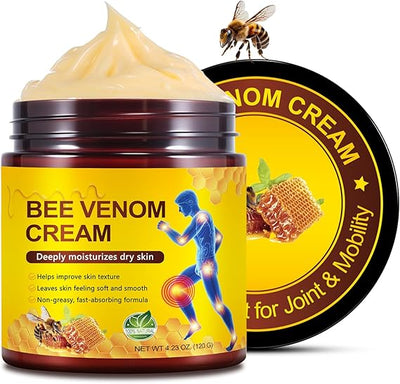
Nutritions Lab's Bee Venom Cream uses cosmetic-grade purified bee venom formulated for topical use.