"Lymphatic drainage" has become a wellness buzzword, but the lymphatic system itself is a real, well-documented part of your body's immune and fluid-balance function. Here's a full, practical guide to what it does and how to support it — grounded in what's actually known, not hype.
What Is the Lymphatic System, and Why Does It Matter?
Your lymphatic system is a network of vessels and nodes that runs alongside your circulatory system. It carries a fluid called lymph, which helps remove waste products and supports your immune system by transporting white blood cells throughout the body. Unlike blood, which is pumped by the heart, lymph relies on muscle movement and breathing to keep flowing. Anatomy and physiology research has long established the lymphatic system's role in immune function and fluid balance, and lymphatic massage techniques have been studied in clinical settings, including for post-surgical recovery support.
Signs Your Lymphatic Flow Might Be Sluggish
- General puffiness or mild swelling, especially after long periods of sitting or travel
- Feeling sluggish or run-down
- Skin that feels congested or less firm than usual
These signs are common and usually not a cause for concern, but persistent or one-sided swelling should always be checked by a doctor, since it can also signal other medical conditions.
Natural Ways to Support Lymphatic Drainage
Movement & Exercise
Because lymph relies on muscle contraction to move, regular movement — walking, stretching, or light exercise — is one of the most consistently recommended ways to support healthy lymphatic flow.
Hydration
Lymph is largely water-based, so staying adequately hydrated throughout the day supports the fluid balance the system relies on.
Dry Brushing
Dry brushing (using a natural-bristle brush on dry skin before showering) is a popular at-home technique some people use as part of a lymphatic self-care routine, brushing gently toward the heart.
Self-Massage Techniques
Gentle, light-pressure self-massage — much lighter than a typical deep-tissue massage — is the basis of professional lymphatic drainage massage, and simplified versions can be done at home.
Botanical & Herbal Support
Certain botanicals have long been used in traditional wellness routines alongside movement and hydration as a daily supplement habit, which is where a formulated botanical blend can fit in.
Capsules vs. Liquid Drops: Which Botanical Format Is Right for You?
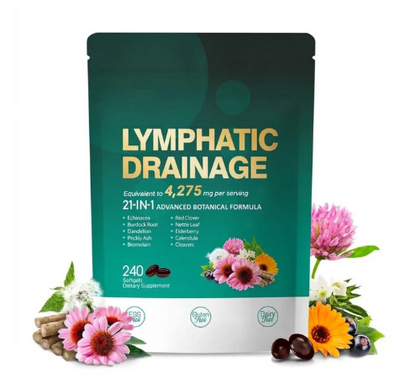
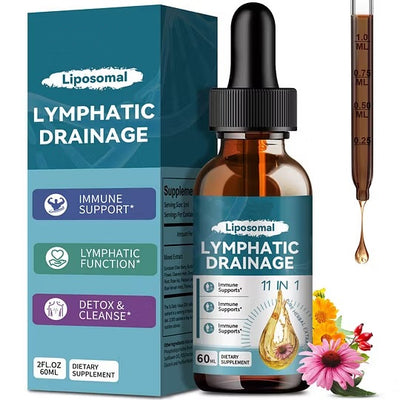
If you prefer a simple, measured daily habit, softgels like our Lymphatic Drainage Support 21-in-1 Formula make it easy to take the same dose every day without measuring anything. If you'd rather adjust your serving or prefer not to swallow capsules, our Lymphatic Drainage Drops mix straight into water or juice.
Who Should Be Cautious
Speak with a doctor before starting any new lymphatic support routine if you have a history of blood clots, active infection, heart or kidney disease, or if you're pregnant. Persistent, one-sided, or painful swelling should always be evaluated by a medical professional rather than managed with self-care alone.
Frequently Asked Questions
Is lymphatic drainage the same as detox?
Not exactly — "detox" is a broad wellness term, while lymphatic support specifically refers to helping the lymph fluid that carries immune cells and waste products move through the body.
How often should I do self-massage or dry brushing?
Many people include it as part of a daily or few-times-a-week routine, similar to any other self-care habit — consistency matters more than intensity.
Can supplements alone improve lymphatic flow?
Botanical supplements are generally used to complement movement, hydration, and self-massage, rather than as a stand-alone solution.
The Bottom Line
Supporting your lymphatic system is really about a handful of consistent daily habits — movement, hydration, and gentle self-care — with a botanical formula like our Lymphatic Drainage Support or Lymphatic Drainage Drops as an easy addition to that routine.
This article is for general information only and is not medical advice. These products are dietary supplements and are not intended to diagnose, treat, cure, or prevent any disease. Consult your healthcare provider before starting any new supplement or self-care routine, particularly if you have an underlying medical condition.
More in Lymphatic Health & Detox
- Copper Peptides vs. Collagen Peptides: What's the Difference for Your Skin? (Skin, Peptides & Anti-Aging)