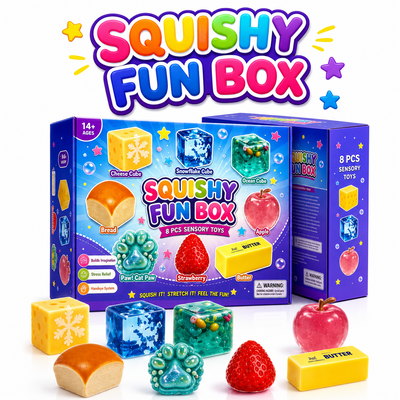
Fidget and squishy toys are a genuine occupational therapy tool that also became a mainstream trend — and like most trends, the marketing ran ahead of the research. Here's a straightforward look at what's actually supported.
The Idea Behind Fidget Toys
The underlying concept is real: self-directed movement and tactile input (squeezing, squishing, manipulating an object) is a long-used occupational therapy strategy to help with self-regulation, especially for kids who have trouble sitting still, managing excess energy, or calming down when overstimulated. Occupational therapists have used fidget-type tools this way for a long time, well before the commercial fidget toy trend.
What the Research Actually Shows
This is the part worth being honest about: when specific commercial fidget products (like fidget spinners) were formally reviewed, researchers found the popular claims — particularly around helping ADHD or anxiety symptoms — weren't well supported by rigorous evidence, despite how widely those claims were marketed. That doesn't mean fidgeting itself doesn't help some kids; it means the specific commercial products haven't been proven in controlled studies the way the marketing implies. The broader concept of self-directed sensory input as a self-regulation strategy has more support in occupational therapy practice than any one specific toy design does.
Who Fidget and Squishy Toys Tend to Help
- Kids who naturally fidget, tap, or move when concentrating — giving that movement an outlet rather than suppressing it
- Kids working on self-regulation skills, often as one small tool within a broader occupational therapy or classroom strategy
- Kids who use tactile input to manage overstimulation or anxious moments
They're not a guaranteed fix for attention or anxiety difficulties, and for some kids (or in some settings, like a classroom) they can end up being more of a distraction than a help — it genuinely varies by child.
How to Use Them Well
- Introduce a variety and let the child find what actually helps them — texture and type preference is very individual
- Use them as a supplement to (not a replacement for) other self-regulation strategies like breathing techniques or movement breaks
- Watch whether it's actually helping focus/calm, or becoming a distraction — and adjust accordingly rather than assuming it must be working
- Check age recommendations, since small squishy toys can be a choking hazard for very young children
Frequently Asked Questions
Do fidget toys actually help with ADHD?
The evidence specifically on commercial fidget products for ADHD symptoms is weaker than the marketing suggests. Some kids genuinely find them helpful for focus; it shouldn't be relied on as a stand-alone strategy for a diagnosed condition.
Are squishy toys safe for young children?
Check the age recommendation on the specific product — small or easily-broken squishy toys can pose a choking hazard for toddlers and young children.
Why did my child stop using their fidget toy after a few days?
Completely normal — sensory preferences and novelty both play a role. It's worth having a few different textures/types available rather than assuming one product will be the answer.
This article is for general educational purposes and is not medical advice or a treatment for ADHD, anxiety, or any diagnosed condition. Check age recommendations for choking hazards, and consult a pediatrician or occupational therapist for guidance specific to your child.
Nutritions Lab's 8-Piece Squishy Fun Box offers a variety of textures so your child can find what actually works for them.